Saturday, 31 March 2012

16 Chinese websites closed, six detained for spreading rumours - India

31  mar 2012

16 Chinese websites closed, six detained for spreading rumours

Beijing: Chinese authorities closed 16 websites and detained six people responsible for "fabricating or disseminating online rumors," the State Internet Information Office (SIIO) and Beijing police said Friday.

China Internet
The websites, including meizhou.net, xn528.com and cndy.com.cn, were closed for spreading rumors of "military vehicles entering Beijing and something wrong going on in Beijing," which were fabricated by some lawless people recently, said a spokesman with SIIO, reported Xinhua.
The rumours have caused "a very bad influence on the public" and the websites were closed in accordance with laws for failing to stop the spread of rumours, said the spokesman.
Beijing police also detained six people for allegedly fabricating and spreading the above-mentioned rumours, particularly through microblogging posts, according to the Beijing Municipal Bureau of Public Security.
An undisclosed number of people who had disseminated similar rumours on the Internet were also "admonished and educated," who have shown intention to repent, the police said.

Friday, 30 March 2012

Largest Hindu temple in Russia faces eviction, demolition - India

30 mar 2012

Moscow Russia's biggest Vedic Cultural Centre housing the country's largest Hindu temple is facing demolition in St Petersburg, the hometown of President-elect Vladimir Putin, as a court has ordered its "eviction" from the leased premises.
"Following an arbitration court decision on Thursday (yesterday), the biggest Hindu Temple of Russia will now be demolished," Chairman of the Centre Suren Karapetyan said, appealing to Presidents of India and Russia to provide "urgent
help".
"We are expecting some kind of intervention from the Indian government as we are preserving the Indian culture and traditions in Russia. We appeal to Russian President Dmitry Medvedev to help us in our cause and save the cultural centre and the temple from being demolished," Karapetyan said.
"We are not getting justice and we are being illegally thrown out, we had a lease agreement of 49 years," he said.
The lease deal was signed in 1992 with the state-run federal research institute, now converted into JSC "GosNIIkhimanalit" Joint Stock Company.
The federal arbitration court of the North-West district in St Petersburg has upheld the decision of 13 arbitration appeal court about the cancellation of the lease agreement between the Local Hindu Religious Organisation "Vedic Society of Spiritual Development" and JSC "Gosniikhimanalit".

"The court has refused to save the temple and has ordered the eviction of the Hindu Temple from leased premises," Karapetyan said.

Wednesday, 28 March 2012

Delhi Metro begins work on linking Faridabad with Delhi - India

28 mar 2012

Delhi Metro begins work on linking Faridabad with Delhi


New Delhi:  In good news for residents of Faridabad, Delhi Metro today began construction of the 14-km link that connects the satellite city with the national capital.

The laying of foundation for piers/pillars on which viaduct will be put up began today at Faridabad in the presence of Delhi Metro Managing Director Mangu Singh and officials from Haryana Government.

The first piling work started near Sector 28, Faridabad on the Mathura Road National Highway.

The fully-elevated corridor, the longest Metro line in the NCR, will be constructed at an estimated cost of Rs. 2,533 crore by 2016 when the Delhi Metro's Phase-III is expected to be completed.

The Badarpur-Faridabad link is an extension of the existing Central Secretariat-Badarpur corridor and will be integrated with it after completion.

According to the Detailed Project Report (DPR), the daily ridership of this 13.875 km Metro corridor is expected to be 2.14 lakhs (in 2014 after commissioning of the corridor for the public).

The civil contract for the construction of this corridor has been awarded in February, 2012, and the corridor will be commissioned by end of 2014.

The average height of the pillars on this corridor will be approximately 9 meters and over 500 piers (pillar) will be erected to make the viaduct for this corridor.

"On this corridor, Delhi Metro will be using specially designed pre-cast U shaped girders to complete the viaduct in a short time of 20 months. This is for the first time in Delhi Metro's history where a single span of approx. 27 metres in length and weighing about 160 tonnes will be used," a DMRC spokesman said.


Tuesday, 27 March 2012

Bird flu claims sixth victim this year in Indonesia - India

27 mar 2012

Bird flu claims sixth victim this year in Indonesia

A 17-year old construction worker has died of bird flu on Indonesia's Lombok island, the sixth death from the virulent disease this year, a health ministry official said on Tuesday.
The man developed fever on February 28 and was admitted to a local hospital five days later where he died on March 9, the ministry's head of animal-borne infectious disease control said. "A laboratory result confirmed that he tested positive for the bird flu virus," Rita Kusriastuti told AFP, adding that the man contracted the H5N1 virus from poultry living around his house.
"Some ducks and chickens in his neighbourhood died of the virus, which has also been confirmed by a lab result," she said.
Concerns about avian influenza have risen in Asia since China in late December reported its first fatality from the virus in 18 months. Since then one more person has died in China.
Vietnam and Cambodia also recently reported deaths from avian influenza and the spread of the H5N1 virus in chickens in Hong Kong prompted a mass cull of birds.
Indonesia has been the nation hardest-hit by bird flu, with 155 deaths reported since 2003, according to the latest figures given by the World Health Organization, which exclude the latest death in Indonesia.
The virus typically spreads from birds to humans through direct contact, but experts fear it could mutate into a form that is easily transmissible between humans, with the potential to kill millions in a pandemic.

Monday, 26 March 2012

Chris Cairns wins libel case against Lalit Modi - India

26 mar 2012

Chris Cairns wins libel case against Lalit Modi


London: Chris Cairns, the former New Zealand allrounder, has won his libel case against Lalit Modi and has been awarded damages of £90,000. Neither party was present when the verdict - which is open to appeal - was announced in the High Court in London.
Modi has been granted permission to appeal the verdict on damages but not liability.

Justice David Bean, who was hearing the case without a jury, also awarded Cairns £400,000 in interim costs, which Modi will have to pay within 28 days.

The judge said Modi had "singularly failed" to provide any reliable evidence that Cairns was involved in match-fixing or spot-fixing, or even strong grounds for suspicion of cheating.

"It is obvious that an allegation that a professional cricketer is a match-fixer goes to the core attributes of his personality and, if true, entirely destroys his reputation for integrity," Justice Bean said. "The allegation is not as serious as one of involvement in terrorism or sexual offences (to take two examples from recent cases). But it is otherwise as serious an allegation as anyone could make against a professional sportsman."

In a statement read out on his behalf after the verdict, Cairns said it "lifts a dark cloud hanging over me" for the past two years. "I feel great joy because my past creer has come through this unscathed and remains intact. I had the courage to stand up in the highest court to defend my name. I feel great relief that I am able to walk into any cricket ground in the world with my head held high."

On January 5, 2010, Modi tweeted that Cairns had been removed from the forthcoming IPL auction list because of his involvement with match-fixing. Cairns denied this but Modi responded by saying: "Let him sue us, then we will produce what we have in court." Cairns issued the writ in London's High Court in January 2010, shortly after Modi's claims were made public.

Cairns was captain of Chandigarh Lions in the Indian Cricket League but had his contract terminated in October 2008, during the third edition of the tournament. The official reason given was that Cairns had breached the terms of his contract by failing to disclose an ankle injury.

During the trial, Cairns spent almost eight hours giving evidence over two days. His witnesses included his wife Mel and advisor Andrew Fitch-Holland.

Sunday, 25 March 2012

Japan to push anti-terror measures at nuclear plants - India

25 mar 2012

Japan to push anti-terror measures at nuclear plants


Dr Sanjay Kumar Cardiac Cardiothoracic Heart Surgeon India


Tokyo:  The U.S. had repeatedly warned Japan about vulnerabilities at its nuclear plants in case of a September 11-style terror attack. It turned out Washington was right about the soft spots, but wrong about the enemy that would strike them.

When nature unleashed its own fury on Japan last year with a devastating tsunami, a list of U.S. recommendations proved highly prescient. The elements Washington identified as most vulnerable in an attack - spent fuel pools, cooling systems, backup electricity - were the ones worst hit in Japan's disaster.

Tokyo had ignored the recommendations, which were implemented at U.S. nuclear sites, because Japanese officials thought the chances of terrorist-flown aircraft striking its plants were remote.

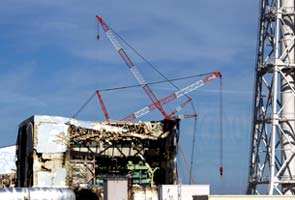
But as leaders from around the world head to Seoul for a major summit this week on nuclear security, Japan's disaster at its Fukushima plant has provided a salient example of how solid protections against terrorist attacks go hand in hand with protections against natural disasters.

The summit is primarily about ways to keep nuclear materials out of the hands of terrorists, but the Japanese government plans to propose a series of Fukushima-inspired measures to enhance emergency power backup systems and advocate a closer link between anti-terror security and general safety issues.

"We have to imagine the unimaginable," Kensuke Yoshida, the director of the arms control and disarmament division of Japan's Foreign Ministry and a member of Japan's delegation, told The Associated Press.

"Once an incident happens, the consequences will be extremely grave, whether caused by a natural disaster or terrorists," Mr Yoshida said.

Japan had been slow to make that connection.

Documents made public since Japan's nuclear crisis began last year suggest the scenario that played out in Fukushima was by no means unforeseeable - it was simply ignored.

After the 9/11 attacks, the U.S. Nuclear Regulatory Commission issued a number of directives to the domestic nuclear industry based on a review of what might happen if an airliner hijacked by terrorists was crashed into an atomic plant.

It expressed concern that such an attack could cripple a plant's power system, and proposed portable diesel-driven pumps, portable power supplies and hoses be made readily available so that reactor cores can be kept cool to prevent them from going into dangerous, radiation-spewing meltdowns. It also suggested measures to provide backup cooling water to the vulnerable spent fuel pools.

The suggestions were passed on to Japan several times, but Tokyo dismissed them because it regarded the recommendations as a terrorism issue and did not think it faced a significant terrorist threat, according to Tetsuya Endo, a former diplomat and vice chairman of the Atomic Energy Commission of Japan.

"The agency that got the recommendations just put them in their pocket. No one else knew anything about it," said Mr Endo, who is on an independent fact-finding commission that recently released a scathing review of Japan's response to the crisis.

"We are an island nation with an island mentality. We see ourselves as free from the possibility of terrorist attack," he said.

Last year's March 11 earthquake and tsunami devastated the very systems that the NRC had found to be weakest. Fukushima experienced the electrical blackout that it warned of, and three of its reactors went into meltdowns, forcing tens of thousands to evacuate as plant workers struggled to find ways to keep them cool.

In recent testimony before a parliament-appointed investigative panel, Haruki Madarame, a nuclear physicist and head of Japan's Nuclear Safety Commission, acknowledged that Japan should have taken the U.S. findings more seriously.

"Even though we were aware of the issue and knew that they were taking steps, we didn't do anything," he said. "When other countries were discussing the problems, we only wasted time trying to find excuses why we didn't have to do it."

Edwin Lyman, a nuclear terrorism expert with the Union of Concerned Scientists, said Japan's crisis is a good case-in-point for experts who have long warned that anti-terrorism measures need to be enhanced.

"The Fukushima accident has certainly illustrated the dependence of nuclear plants on electrical power supply, both off- and on-site, and how core damage can occur solely as a result of a prolonged loss of power in the absence of timely intervention," he said.

But he said the disconnect between policymakers who are primarily concerned with anti-terror measures and those focused on mitigating natural disasters continues to be a major problem.

Mr Lyman said the United States' post-9/11 recommendations, which were made public in May to support the NRC's argument that the U.S. was prepared for a Fukushima-type event, reflected that imbalance.

"The measures were specifically intended to help plants survive the impact of a single aircraft, and not to survive other types of initiating events, like earthquakes and floods," he said. "In fact, the U.S. guidance specified that such equipment did not have to be seismically qualified."

Because of the Fukushima example, he said, the NRC is now updating its measures to take into account a wider variety of challenges.


Saturday, 24 March 2012

Private colleges looking to shut down triple in a year - India

24 mar 2012

Private colleges looking to shut down triple in a year

HT
As many as 138 private institutes across the country, including 65 management and 15 engineering colleges, have sought permission to close from the All India Council for Technical Education (AICTE). This is more than three times the number of institutes that had come up with the request last year.

“We have received applications for closure from 138 institutes. But the final closure can be done only after we get a no-objection certificate from the state governments and the universities concerned,” said SS Mantha, chairman, AICTE.

Of the 138 colleges that have sought permission in this regard, 53 are from Andhra Pradesh. As many as 3,800 engineering colleges and 4,000 management colleges in the country come under the AICTE. Mantha said the council has received applications for opening 669 new institutes this year. “If we take this into consideration, I am sure there will be an overall increase in the number of institutes, even after closure of some that have applied.”
Stating that a majority of the institutes say they are not able to get students, he said, “Most of them are located in remote areas, possess poor infrastructure facilities, and have practically zero interaction with industries. The institutes will have to enhance interaction with the industry if they want to boost employment opportunities for students,” he said.
In a bid to bolster industry-institute interaction and increase employment, the AICTE will identify private institutes across the country on a nominative basis, where industries can set up their research arms, Mantha said. “To begin with, we will identify 100 institutes where industries can set up research centres from the next academic session. This can later develop into clusters,” he added.